

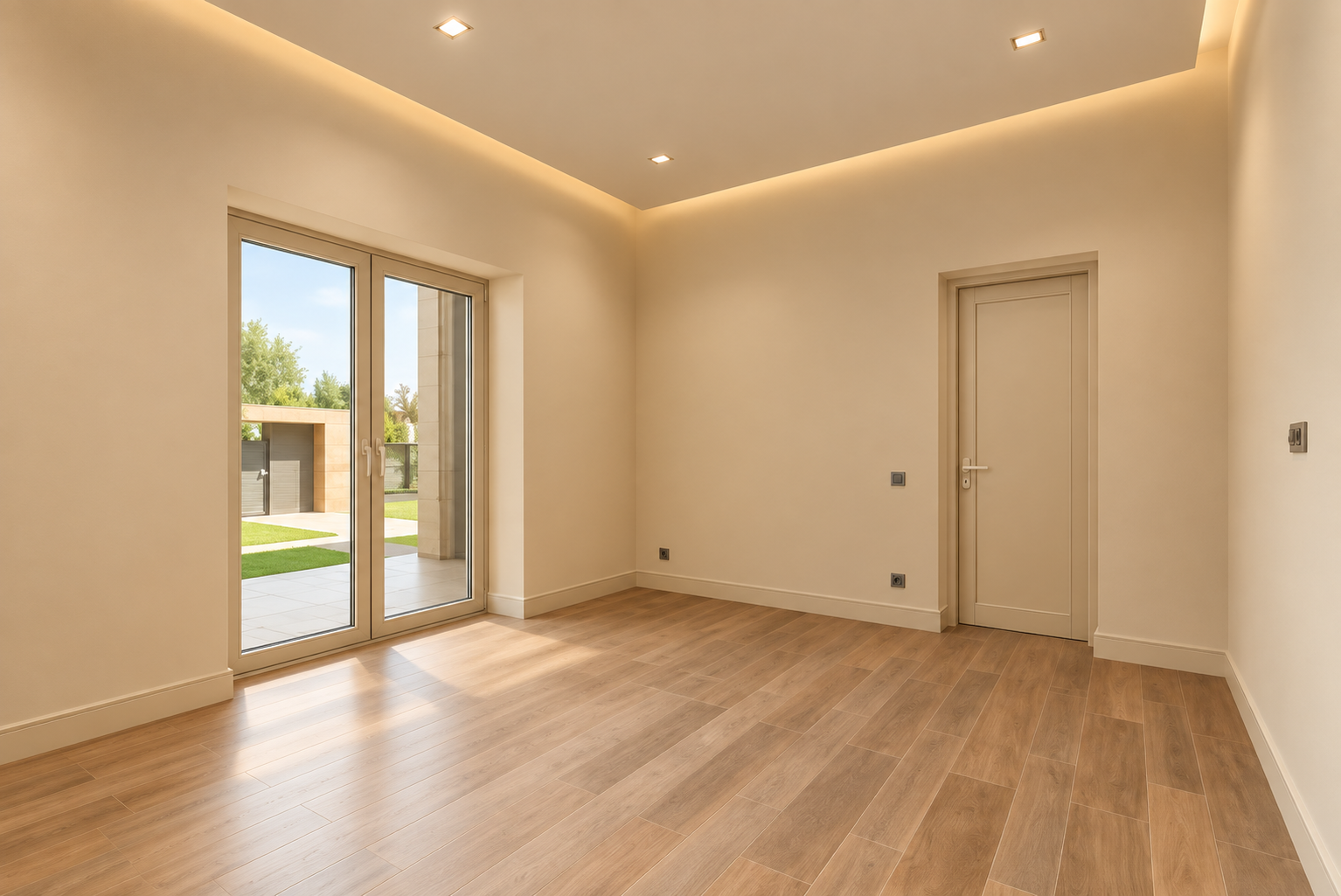
Buying new doors and windows sounds simple right up until you start comparing profiles, glass types, hardware, installation quality, warranties, and prices — and then it stops being simple pretty fast. If you’re planning to Buy uPVC Doors and Windows in Rajasthan, the stakes are a little higher than usual. The region deals with harsh summer heat, dust-heavy winds, a proper monsoon, and sharp swings in temperature through the year. Take Jaipur — it sits in a composite climate zone with brutally hot summers, and dust storms aren’t rare either. Studies on Jaipur’s building envelope keep coming back to the same point: windows, shading, and how the envelope is designed all play a real role in keeping indoor spaces cool and comfortable.
uPVC — unplasticized polyvinyl chloride, if you want the full term — has become the go-to alternative to wood and certain metal-frame systems mainly because it offers decent thermal insulation, holds up against weather, needs very little upkeep, and comes in a lot of contemporary designs. That said, not every uPVC window or door on the market is automatically a good one. The profile system, the reinforcement inside it, the glass you pick, the seals, the hardware, how precisely it’s manufactured, and how well it’s installed — all of this decides how the product actually performs once it’s on your wall. Rajasthan’s own building-envelope material records list several uPVC window systems and note that frame specifications differ quite a bit between suppliers. It’s worth keeping in mind before you assume “uPVC” automatically means “good.”
This guide walks through the whole process — figuring out what you actually need, picking the right design, evaluating an uPVC door and window manufacturer in Rajasthan, reading quotations properly, and steering clear of the mistakes most first-time buyers make.
Why uPVC Works for Rajasthan Homes
Insulation and sealing matter a lot here, simply because of what the climate throws at a building. Jaipur’s summers are severe, winters are comparatively mild, and dust-laden winds show up often enough to be a real design consideration — the monsoon adds yet another layer. So a window here isn’t just decoration; it needs to manage heat, keep dust out, control air leakage, and cut down noise. A properly built uPVC system can handle a good chunk of this through multi-chamber profiles, well-designed gaskets, the right glazing, and frames that are installed correctly — not just supplied correctly.
uPVC also skips the repainting cycle that wooden frames demand, and it resists corrosion. That’s a genuine plus for anyone who wants a clean look without constant upkeep. But here’s the catch — performance depends on the entire system working together, not just on the frame material. Industry bodies like UWDMA India recommend checking profile standards along with factors like air permeability, water tightness, wind-load resistance, and glass safety before you finalise anything.
Read More: The Ultimate Guide to Choosing the Best Portable Induction Cooktop for Modern Kitchens
So the real question for a Rajasthan home isn’t “Is uPVC good?” It’s more specific than that: which profile, which glass combination, which hardware, and which installation approach actually fits your particular house?
Understand Your Home Before You Buy uPVC Doors and Windows
Before you even call a supplier, spend some time looking at your own openings. Are you replacing tired old wooden windows, fitting windows in a brand-new house, renovating a flat, or building a villa from the ground up? Each of these calls for a different approach. Note down sizes, which direction each opening faces, which room it’s in, how much ventilation that room needs, privacy concerns, sun exposure, and whether it opens onto a noisy road.
Orientation genuinely changes things. A big west-facing window catches harsh afternoon sun, while a north-facing one behaves very differently in terms of daylight and heat gain. Bedrooms usually need more noise control and privacy; kitchens and bathrooms need proper ventilation; balconies and living rooms often work better with larger glazed sections and sliding or lift-and-slide setups.
It also helps to inspect your existing frames before asking for a quote. Is there water leakage? Cracked plaster? Uneven masonry? A shutter that’s a pain to operate? Excess dust getting in around the edges? Pass all of this on to whoever is quoting you — a proper quotation should reflect the real site condition, not a generic assumption.
A good supplier will actually ask about these things instead of throwing a per-square-foot number at you within the first two minutes. Most established Jaipur suppliers, at this point, start the conversation by asking about opening size, room usage, ventilation, sound insulation, glass preference, design, colour, and budget — in that rough order.
Picking the Right uPVC Window Style Room by Room
There’s no single “best” uPVC window — it really depends on the room. Casement windows are popular when strong ventilation matters, since the sash swings outward or inward and gives a wide clear opening. Sliding windows move sideways instead, which is handy when you’re short on space for a swing arc, indoors or outdoors.
Tilt-and-turn windows sit somewhere in between — tilt them for controlled airflow, or turn them fully open when you want more. They work well in bedrooms, upper-floor rooms, and modern homes where flexible ventilation matters. Fixed windows skip ventilation altogether but let in light and views, so they suit spots where you don’t need to open anything. And if the architecture calls for something more distinctive, bay, corner, French, or combination windows come into play.
Function should come before looking here. A gorgeous window that’s awkward to operate, badly ventilated, or the wrong size becomes annoying fast — usually within the first monsoon. Ask whichever uPVC doors and windows suppliers you’re talking to why they’re recommending a particular style for a particular room, and don’t settle for “it looks nice” as the only answer.
One more thing people forget — cleaning access, especially for upper-floor windows. A design that looks stunning in a showroom might be a nightmare to clean once it’s several floors up with no easy exterior access.
Choosing the Right uPVC Door Design
uPVC doors come in several formats — single doors, double doors, sliding doors, French-style doors, tilt-and-slide systems, and larger patio configurations. What works best depends heavily on where the door is going. A bathroom door has very different needs from a balcony door, and a main entrance usually needs a much stronger security and hardware package than either.
For balconies and patios, sliding doors are a favourite because they open up a wide visual connection between indoors and outdoors without eating up floor space for a swing. French-style doors lean more traditional, while a lot of newer homeowners prefer large glass panels with thin, clean frame lines. Some manufacturers, including APL Apollo Doors and Windows, also offer coloured and wood-look finishes, so uPVC can blend into both contemporary layouts and more traditional Rajasthan-style architecture.
Security deserves just as much attention as appearance. Ask about the locking system, hardware quality, reinforcement, hinges, handles, and where exactly the locking points sit along the frame. The frame and the shutter need to function as one unit, not two separate parts bolted together.
If you’re browsing Modern home door ideas, uPVC gives you a lot of room to play. A plain white profile creates a clean, contemporary feel, while a wood-effect finish adds warmth without the maintenance headache real wood brings. The trick is picking a design that suits your home’s architecture — not one that just photographs well on a catalogue page.
What’s Actually Inside a uPVC Profile
The profile is the backbone of any uPVC door or window, and it’s not enough to just confirm “yes, it’s uPVC.” Ask about the profile system, wall thickness, number of chambers, reinforcement, exact dimensions, and which performance standards it meets. Two products can both be “uPVC” and still behave completely differently.
Multi-chamber profiles have internal sections that improve thermal performance and structural strength. Rajasthan’s building-envelope records show that uPVC systems sold in the state vary in thermal conductivity and thickness — which is exactly why comparing actual specs matters more than trusting the word “premium” printed on a brochure.
Reinforcement matters too, particularly for larger openings. Depending on the system, galvanized steel reinforcement gets built into the profile for added rigidity. Rajasthan’s own Building Schedule of Rates documentation, for instance, describes uPVC casement windows built with multi-chamber construction, galvanized reinforcement, welded corners, drainage channels, and EPDM/TPE-E gaskets.
When you’re comparing quotes, ask for the technical specification in writing — profile series, chamber count, dimensions, reinforcement details, gasket type, glass spec, hardware grade, and warranty terms. Once you have that on paper, it’s a lot easier to understand why two quotes with wildly different prices might actually be quoting two very different products.
Picking Glass for Heat, Noise, and Safety
Glass changes the performance of a window more than most buyers realise. Even a great uPVC profile paired with the wrong glass won’t give you the result you’re expecting. UWDMA India specifically flags that glass plays a major role in how much light and heat come through a window, and recommends checking relevant safety standards for glazing before finalising anything.
Single glazing is fine for plenty of homes and applications, but if you want stronger thermal or acoustic performance, double glazing is worth looking into. What’s right for you depends on orientation, how the room is used, how noisy the area is, your budget, and how large the opening is.
If a window gets hit with strong direct sun, ask about solar-control glass options. Living next to a busy road? Acoustic glazing or a suitable laminated option might be worth the extra cost. And for doors or large glazed sections, safety glazing becomes genuinely important — especially anywhere people might accidentally walk into the glass.
Don’t let the conversation get reduced to “6mm glass” as if that one number tells you everything. Ask about the full glass build — single, double, laminated, toughened, coated, or gas-filled — because “6mm” alone says almost nothing about how it’ll actually perform.
Comparing uPVC Manufacturers and Suppliers in Rajasthan
Finding an uPVC door and window manufacturer in Rajasthan isn’t hard, particularly in a big market like Jaipur. The harder part is figuring out which one actually delivers on product quality, manufacturing precision, installation skill, proper documentation, and after-sales support once the sale is done.
Shortlist a few suppliers instead of grabbing the first quote you get. Ask for a showroom visit or completed project references wherever possible. Open the windows, close them, check the handles, run a finger along the gasket, look closely at the corners, and ask how the frames are reinforced. It tells you more than any brochure will.
Established, longer-running names generally have an edge here simply because they’ve had more time to refine manufacturing and build a service network. APL Apollo Doors and Windows, for example, has been in the fenestration business for over three decades and operates through a pan-India network of channel partners, which matters if you ever need service or replacement parts down the line — not just at the time of purchase.
Rajasthan’s government building-envelope database lists a fair number of companies and suppliers tied to uPVC window products in places like Jaipur, Kota, and Ajmer. Worth noting, though — the database itself says the technical details were supplied by the companies, so treat such lists as a starting point rather than a ranking of quality.
Go with suppliers who are upfront about specifications. A reliable quotation tells you exactly what you’re buying — not just “premium uPVC window,” but the actual profile, glass, hardware, dimensions, installation scope, and warranty behind that phrase.
Check How the Manufacturer Handles Installation
A well-engineered window can still perform badly if it’s installed poorly. Gaps around the frame, weak anchoring, sloppy sealing, blocked drainage, or a frame that isn’t level — any of these can cause real problems down the line, even with top-quality material.
Find out who actually installs the product. Is it the manufacturer’s own trained team, or is it handed off to a local contractor? How do they deal with tricky openings, removing old frames, patching plaster, and finishing the edges? And what’s the process if a shutter starts sticking a few months after installation?
A solid installation process starts with accurate site measurement, done before manufacturing begins — not after. The installer should check opening dimensions, diagonals, sill condition, vertical alignment, and the surrounding masonry. Once installed, shutters should move smoothly without needing extra force, locks should click into place properly, and drainage paths should stay clear.
This matters even more for replacement projects, where old buildings often have irregular openings, damaged plaster, or surfaces that aren’t quite even. A supplier — APL Apollo Doors and Windows included — that measures carefully before fabrication tends to catch these issues early, rather than scrambling to fix them mid-installation.
Bottom line: when you buy uPVC Doors and Windows in Jaipur, treat installation as part of the product, not a separate afterthought tacked on at the end.
Don’t Skip the Hardware
Hardware is easy to overlook because buyers naturally focus on the frame and the glass. But handles, hinges, rollers, locking mechanisms, and friction stays affect how the door or window feels every single day you use it. A window can look flawless on day one and still turn irritating within a year if the handle loosens, rollers wear out, or the locking mechanism was never great to begin with.
For main doors and easily accessible windows, security needs extra attention. Ask whether the system supports multi-point locking, and whether the reinforcement actually matches the door’s size and hardware setup. For sliding doors specifically, check the rollers and locking mechanism closely — these two parts do most of the work over time.
Don’t assume an expensive-looking handle automatically means a more secure door. Ask the supplier to actually demonstrate the locking system, and find out what happens if a part needs replacing later — is it something they stock, or something you’ll be waiting weeks for?
It’s also worth checking whether hardware is covered under warranty at all. Profile warranties and hardware warranties often run on completely different timelines and conditions — get this in writing before you sign anything.
uPVC Doors in Jaipur and the Rest of Rajasthan
The buying experience does shift a bit depending on where you live. uPVC doors in Jaipur are widely available since it’s a large residential and commercial market with plenty of manufacturers, fabricators, dealers, and installation crews already active there. Local suppliers currently offer casement, sliding, tilt-and-turn, fixed, French, and other configurations, along with several door styles to pick from.
Outside Jaipur — think Jodhpur, Kota, Ajmer, Udaipur, Bikaner, Alwar, Bharatpur, Sikar — service coverage becomes the thing to check first. A manufacturer might build an excellent product and still be a headache to deal with if getting a replacement part or a service visit means someone driving several hours.
Ask directly about delivery timelines and service availability in your specific city. If a manufacturer — APL Apollo Doors and Windows, for instance, given its wider pan-India presence — has completed projects near you already, ask for references. It tells you more about real installation quality and how quickly they actually respond when something needs attention, compared to what’s promised during the sales pitch.
Local conditions vary a lot too — dust exposure, direct sun, road noise, humidity, building orientation. A good supplier customises the specification for your property instead of selling the same configuration to every single customer who walks in.
Modern Home Door Ideas Without Losing Function
Modern home design tends to favour large glass sections, clean lines, neutral colours, and a strong visual link between indoor and outdoor spaces. uPVC systems support all of this pretty well through sliding doors, French doors, large fixed glazing, corner windows, and combination setups.
But looks shouldn’t be the only factor driving the decision. A large glass door catching intense afternoon sun needs a different glass spec than a shaded one. A bedroom window facing a busy street probably needs more acoustic attention than one overlooking a quiet garden.
Wood-look uPVC finishes work well for homeowners who want that traditional warmth without actually committing to real timber frames and their upkeep. White, grey, and black finishes, meanwhile, suit more minimalist, contemporary architecture.
When you’re going through Modern home door ideas, try to picture how the design will hold up in five or ten years, not just how it photographs today. Trends move fast, but clean proportions and sensible layouts tend to age well. Pick colours and configurations that actually go with your flooring, walls, furniture, and facade — not something chosen purely because it looked good in someone else’s home.
Read the Warranty and After-Sales Terms Properly
A warranty only helps if you actually understand what it covers. Before placing an order, ask whether it applies separately to the profile, glass, hardware, installation, seals, and accessories — and what could void it.
Some manufacturers advertise long profile warranties while hardware and other parts run on shorter, separate timelines. Get the documentation to clearly state the supplier, the product specification, the installation date, and the exact terms that apply.
After-sales support matters just as much. Doors and windows have moving parts, and even good-quality systems occasionally need adjustment or a replaced component years down the line. Ask how service requests get logged, how fast technicians typically respond, and whether spare hardware is kept locally rather than ordered in from elsewhere. This is one area where a manufacturer with an established, wider service network — APL Apollo Doors and Windows being one example — tends to have an easier time following through, purely because the infrastructure already exists.
Read More: 7 Kitchen Upgrades That Can Transform a Salt Lake City Home
Don’t judge after-sales service only by what’s promised during the sales conversation. Ask for references, and look for independent feedback where you can find it. A supplier who communicates clearly before the sale is usually — though not always — easier to deal with once you actually need support.
Common Mistakes to Avoid
Picking the cheapest quote without comparing specifications is probably the single biggest mistake buyers make. A close second is assuming all uPVC products are basically the same just because they share the same base material — profile quality, reinforcement, glass, hardware, seals, fabrication, and installation can all differ wildly between two “uPVC” quotes.
Choosing a window style before thinking about ventilation and cleaning is another one. A fixed window looks great but gives you zero ventilation. A large outward-opening window might be impossible to operate if there’s no exterior clearance. A sliding window saves space but has a different opening area and mechanism entirely.
Buyers also tend to ignore glass altogether. The frame gets all the sales attention, even though glass usually covers the largest visible area of the opening. If heat reduction or noise control is your actual priority, push for detailed answers on glazing — don’t let it slide.
And avoid vague quotations. If a document just says “uPVC window with glass” and stops there, ask for the real specification. A professional supplier should be able to walk you through the exact profile, glass, reinforcement, hardware, gaskets, installation method, and warranty involved — without hesitating.
A Quick Checklist Before You Sign
Before finalising anything, go through the full specification one more time. Confirm the dimensions come from an actual site measurement, not a phone estimate. Check the opening style, frame colour, glass type, hardware, handles, locks, reinforcement, mosquito mesh (if needed), and any special design elements.
Confirm the total installed price and the payment schedule. Ask whether dismantling old windows, transport, debris removal, plaster repair, silicone sealing, and final cleaning are all included — these small items have a way of turning into surprise costs mid-installation otherwise.
A practical checklist to run through:
- Profile series and dimensions
- Number of chambers
- Reinforcement specification
- Glass type and thickness
- Gasket specification
- Hardware and locking system
- Window and door opening style
- Frame and laminate colour
- Site measurement
- Installation scope
- Delivery timeline
- Warranty documentation
- After-sales service
- Final tax-inclusive price
Keep a copy of the approved quotation, and if anything changes later, ask for an updated document. It’s a small habit that saves a lot of arguments down the road.
Summary
- Rajasthan’s heat, dust, and temperature swings make thermal performance and sealing genuinely important, not optional extras
- Assess your rooms and openings before choosing a window or door style
- Compare profile, reinforcement, glass, hardware, gaskets, installation, and warranty — not just the headline price
- Match window and door types to each room’s ventilation, privacy, and light needs
- Shortlist a few uPVC doors and windows suppliers and get itemised quotations from each
- Installation quality and after-sales service matter as much as the product itself
Final Thoughts
If you’re planning to Buy uPVC Doors and Windows in Rajasthan, focus on the complete system, not just how it looks in a brochure or how cheap the quote is. The climate here makes thermal performance, sealing, ventilation, and installation quality genuinely important — Jaipur’s hot composite climate in particular puts real weight on controlling heat gain through the building envelope.
Start by understanding your own rooms and openings, then narrow down window and door styles that actually fit. Compare profile specifications, reinforcement, glass, hardware, gaskets, installation methods, warranties, and after-sales support side by side. When you’re evaluating an uPVC door and window manufacturer in Rajasthan — whether that’s a long-established name like APL Apollo Doors and Windows — ask for clear documentation and get at least a few detailed quotations before deciding.
Whether you’re hunting for uPVC doors in Jaipur, renovating a home in Kota, building a villa in Udaipur, or sourcing from anywhere else in Rajasthan, the principle stays the same: choose based on what your home actually needs, not the marketing language on a supplier’s website. A properly specified, professionally installed uPVC system can give you a modern look along with real, practical benefits — better insulation, low maintenance, weather resistance, and design flexibility that actually holds up over time.
Frequently Asked Question
- Are uPVC doors and windows suitable for Rajasthan’s climate?
Yes, as long as the profile, glass, seals, reinforcement, hardware, and installation are all specified properly for the location. Rajasthan sees intense heat and dust-heavy winds in several areas, so thermal insulation and effective sealing shouldn’t be an afterthought. Jaipur’s own climate research points specifically to how much the building envelope affects heat gain indoors. - What should I check before choosing an uPVC door and window manufacturer in Rajasthan?
Look at their profile specs, reinforcement, glass options, hardware, installation process, warranty, service coverage, and past projects. Ask for an itemised quotation rather than a flat per-square-foot number, and confirm who actually manufactures and installs the product — the two aren’t always the same company. - Which uPVC windows work best for a modern home?
Casement, sliding, tilt-and-turn, fixed, French, and combination windows can all fit a modern home — it really depends on the room and the opening. Base the choice on ventilation, space, cleaning access, daylight, privacy, and thermal needs first, and let the architectural style follow from there. - Do uPVC doors come in different colours and designs?
Yes, Depending on the manufacturer, you’ll find different colours, finishes, configurations, and wood-effect laminates. Current Jaipur suppliers range from plain white profiles to more contemporary and wood-look finishes. - Is it worth comparing multiple uPVC doors and windows suppliers?
Definitely. Comparing a few suppliers shows you real differences in profile systems, glass, hardware, installation approach, warranties, and total cost. The comparison that actually matters is between full specifications — not just who quoted the lowest number.